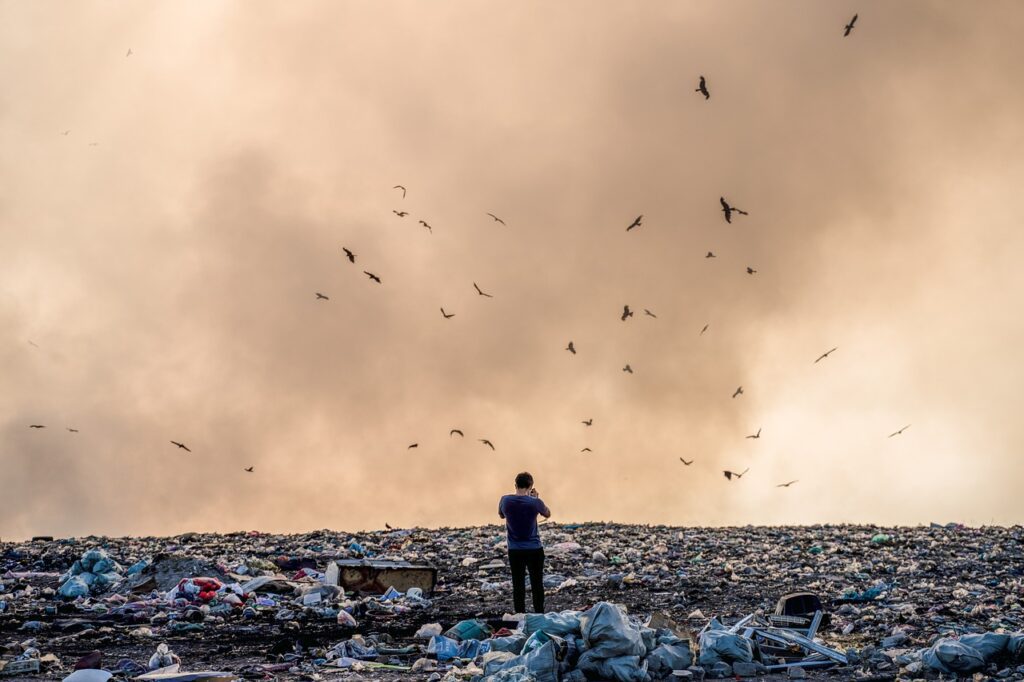
Why has plastic become one of the most persistent environmental challenges of the twenty-first century? From single-use packaging and consumer products to microplastics in oceans, rivers, soils, and even the atmosphere, plastic waste has emerged as a global concern. Sources and Management of Plastic Waste examines the generation, characteristics, environmental impacts, collection, recycling, recovery, and disposal of plastic materials. Understanding the pathways through which plastic enters the environment and the strategies available for its sustainable management is essential for addressing pollution, conserving resources, and advancing a circular economy. These concepts are highly relevant for UGC-NET/JRF, SLET, ARS, GATE, and other competitive examinations.
Use this curated MCQ bank to assess your conceptual understanding, identify knowledge gaps, and strengthen your preparation for competitive examinations.
Syllabus Outline
- Sources of plastic waste (domestic, industrial, agricultural, etc.)
- Pollution of land, water, and air by plastics
- Effects of microplastics on ecosystems and human health
- Long-term environmental consequences of plastic waste
- Plastic Waste Collection and Segregation
- Types of plastic recycling (e.g. mechanical, chemical, and energy recovery)
- Processes and technologies involved in plastic recycling
- Challenges and limitations in plastic recycling
- Strategies to reduce plastic waste at source (e.g., bans on single-use plastics)
- Promotion of reusable and biodegradable alternatives
- Applications of recycled plastics in construction, packaging, and other industries
- Benefits and challenges of using recycled plastics
Quick Study Guide
Plastic waste management requires an understanding of polymer chemistry, environmental degradation pathways, and multi-tier recycling technologies to mitigate the proliferation of microplastics and ecotoxicological risks.
A. Polymer Classification and Resin Identification Codes
Plastics are synthetic macromolecules categorised by their thermal properties and chemical structure, tracked globally via Resin Identification Codes (1 to 7).
- Thermoplastics vs. Thermosets: Thermoplastics (e.g., Polyethene, Polypropylene) possess linear or branched carbon chains that soften when heated and harden when cooled, allowing mechanical recycling. Thermosetting plastics (e.g., Polyurethane, Epoxy resins) form highly cross-linked covalent networks that decompose rather than melt upon heating, making them highly resistant to conventional recycling.
- The Resin Identification Codes (RIC) System:
- 1. PET (Polyethene Terephthalate): Used in beverage bottles; highly recyclable.
- 2. HDPE (High-Density Polyethene): High-density-to-strength ratio; used in milk jugs.
- 3. PVC (Polyvinyl Chloride): Contains chlorine; releases toxic dioxins if incinerated.
- 4. LDPE (Low-Density Polyethene): Flexible; used in plastic bags.
- 5. PP (Polypropylene): High melting point; used in food containers.
- 6. PS (Polystyrene): Brittle polymer; used in foam packaging; highly resistant to degradation.
- 7. Others: Complex blends, polycarbonates, or multi-layer laminates; difficult to isolate.
B. Microplastics and Environmental Degradation Mechanics
Once released into the biosphere, macro-plastics do not truly biodegrade; instead, they undergo physical and chemical weathering.
- Fragmentation Pathways: Solar UV radiation triggers photo-oxidative degradation, breaking down the polymer backbone. Combined with mechanical abrasion from wave action or wind, large plastic fragments break down into microplastics (particles smaller than 5 mm) and nanoplastics (particles smaller than 100 nm).
- Vector for Persistent Organic Pollutants: Because plastic surfaces are hydrophobic, they act as chemical sponges in aquatic systems. They adsorb and concentrate ambient toxic chemicals, such as Polychlorinated Biphenyls and Organochlorine Pesticides, magnifying their ecotoxicity.
C. Processing and Circular Economy Solutions
Managing plastic accumulation follows a structural hierarchy ranging from mechanical reprocessing to molecular conversion.
- Mechanical Recycling (Primary & Secondary): Involves sorting, shredding, washing, and pelletizing clean thermoplastic streams. A major limitation is downcycling, where repeated thermal processing shears the polymer chains, reducing the mechanical tensile strength of the recycled plastic.
- Chemical Recycling (Tertiary): Uses thermochemical processes to break the polymer chains back into their constituent monomer units. Pyrolysis thermally degrades mixed plastic waste in the total absence of oxygen to produce a synthetic liquid crude oil (pyrolysis oil) that can be re-fractionated into pure chemical precursors.
- Quaternary Recycling (Energy Recovery): Involves high-temperature incineration of non-recyclable fractions to generate electricity. This process requires advanced scrubbers to capture toxic volatile metals and HCl.
D. Bioplastics and Enzymatic Depolymerisation
Green chemistry seeks to replace fossil-fuel-derived polymers with degradable biological alternatives.
- Bio-based vs. Biodegradable: Not all bio-based plastics are biodegradable. True biodegradable polymers, e.g. Polylactic Acid, synthesised from corn starch or Polyhydroxyalkanoates accumulated intracellularly by bacteria, can be completely broken down into CO2 and water by microbes under managed industrial composting conditions.
- Enzymatic Bio-recycling: Advanced bioremediation utilises engineered microbial enzymes such as PETase and MHETase isolated from the bacterium Idonella sakaiensis to hydrolyse the ester bonds of PET plastics at mild temperatures, offering a low-energy pathway for complete closed-loop recycling.
Test Your Knowledge
This quiz contains 25 concept-based MCQs on “Sources and Management of Plastic Waste“. Each question has a single correct/most appropriate answer.
*****
1. Which method is commonly used for plastic waste disposal?
a) Incineration
b) Composting
c) Landfilling
d) Recycling
2. Which class of plastics can be melted and moulded by heating and hardened by cooling?
a) Thermoplastics
b) Thermosets
c) Bioplastics
d) Both a and b
3. What is the correct order of plastic recycling?
I – Collection of plastic waste
II – Sorting or arranging plastics into categories
III – Washing to remove impurities
IV – Shredding, resizing, identifying and separating plastics
V – Compounding
a) I, II, III, IV and V
b) V, IV, III, II and I
c) I, III, II, IV and V
d) I, II, IV, III and V
4. What is the advantage of plastic waste recycling over other waste management methods?
I – Decrease CO2 and other harmful gases
II – Recycling plastic requires less energy
III – Recycling plastic waste without the release of volatile gases
IV – It saves fast-depleting landfill space
a) I, II, III and IV
b) I only
c) I, II and IV
d) II, III and IV
5. The waste produced after incineration of plastic waste is mainly composed of:
I – VOCs
II – Ash
III – HCl
IV – CO
a) I, II, III and IV
b) I, II and III
c) I and II
d) II and IV
6. Plastic waste is segregated before incineration to avoid:
a) Explosive accident
b) Excess emission of CO2
c) Combustible materials
d) Excess emission of VOCs
7. Benefits of plastic waste management through incineration include:
I – It produces heat and power needed in different activities.
II – It can be applied in any season.
III – It prevents the production of methane gas.
IV – Cheap setup compared to other waste management methods.
V – It releases ash that can be useful to people and the environment
a) I, II, III, IV and V
b) I, II and III
c) I, II, IV and V
d) II, III and IV
8. Unsafe landfills using plastic waste can lead to:
a) Groundwater contamination
b) Soil Degradation
c) Air Pollution
d) Both a and b
9. How much approximate time is required to degrade plastic waste in landfill processing?
a) 10 to 100 Years
b) 45 to 60 Days
c) 100 to 1000 Years
d) 1 to 2 Years
10. How much plastic waste is thermoplastic?
a) <20%
b) 30-50 %
c) >75%
d) 92-97%
11. The process of converting gases and fatty oils to recover crude petrochemicals and obtain hydrocarbons from plastic waste is referred to as:
a) Pyrolysis
b) Incineration
c) Recycling
d) Bioremediation
12. Which of the following sectors is the largest producer of plastic waste globally?
a) Automotive industry
b) Construction industry
c) Packaging industry
d) Electronics industry
13. What is the primary source of microplastics in the ocean?
a) Industrial waste
b) Cosmetic products
c) Textile fibres
d) Plastic bottles
14. Which of the following plastics is commonly found in single-use products?
a) Polyvinyl chloride
b) Polystyrene
c) Polyethene terephthalate
d) Low-density polyethene
15. Which process is commonly used to recycle plastic waste?
a) Incineration
b) Pyrolysis
c) Mechanical recycling
d) Chemical precipitation
16. What is India’s key challenge in recycling mixed plastic waste?
a) High energy consumption
b) High cost of separation
c) Lack of technology
d) Lack of awareness
17. Which ocean gyre is known for accumulating plastic waste?
a) Indian Ocean Gyre
b) North Pacific Gyre
c) South Atlantic Gyre
d) North Atlantic Gyre
18. Which plastic additive is often a concern due to its endocrine-disrupting properties?
a) Phthalates
b) UV stabilisers
c) Antioxidants
d) Flame retardants
19. Which property of plastics makes them particularly problematic in waste management?
a) High flammability
b) High-density
c) Low biodegradability
d) Low melting point
20. Which of the following is a major component of marine plastic debris?
a) Plastic straws
b) Fishing nets
c) Plastic bottles
d) Microbeads
21. What is the main goal of the Plastic Waste Management Rules 2016 in India?
a) Ban the production and use of single-use plastics
b) Ban the production and use of all plastics
c) Improve the collection and recycling of plastic waste
d) Decrease the import of plastic waste
22. Which process involves breaking down plastics into their monomers for re-polymerisation?
a) Thermal recycling
b) Chemical recycling
c) Mechanical recycling
d) Biological recycling
23. Which type of plastic waste is most commonly found in municipal solid waste?
a) Polypropylene
b) Polyvinyl chloride
c) Polystyrene
d) Polyethene
24. Which material is commonly used as an alternative to plastic straws to reduce plastic waste in India?
a) Metal
b) Glass
c) Paper
d) Wood
25. Which technology can effectively detect and monitor plastic waste in marine environments?
a) Satellite remote sensing
b) Ground-penetrating radar
c) Sonar mapping
d) Infrared thermography
*****
Previous: Sources and Management of Fly Ash
Next: Environmental Impact Assessment and Statement
References
- Gupta, O.P. (2023). Elements of Solid & Hazardous Waste Management, Khanna Publishing House, 1st Edition.
- De, Anil Kumar and De, Arnab Kumar (2024). Environmental Chemistry, New Age International, 11th Edition.
- APHA (2022). Standard Methods for the Examination of Water and Wastewater. 24th Edition, American Public Health Association.
- Singh, J.S., Gupta, S.R., Singh, S.P. & Singh, R. (2026). Ecology, Environmental Science and Conservation, S Chand Publishing, 2nd Edition.
- Erach Bharucha (2017). Environmental Studies, Universities Press, 4th Edition.
🔗 Explore More MCQs: