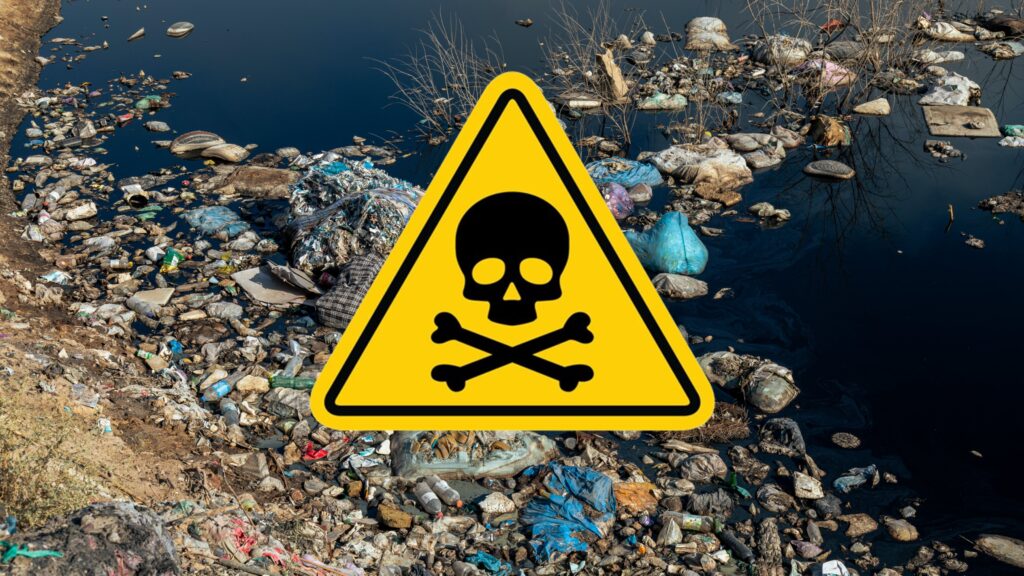
Environmental chemistry of toxic chemicals provides the essential framework for quantifying pollutant concentrations, understanding dose-response relationships, and tracking biomagnification through food webs. Achieving a sophisticated grasp of environmental toxicology indices, chemical structures, and metabolic detoxification pathways is important for UGC-NET/JRF, SLET, ARS, GATE, and other competitive examinations.
Use this targeted practice module to challenge your analytical understanding, diagnose weak areas, and optimise your preparation.
Syllabus Outline
- Introduction to toxicology and types of toxicants (organic and inorganic).
- Routes of exposure (inhalation, ingestion, dermal) and factors influencing toxicity (e.g. dose, duration, frequency).
- Transformation and degradation of toxic chemicals in the environment.
- Bioaccumulation and biomagnification.
- Analytical methods for the detection of toxic chemicals
- Hazard identification and exposure assessment
- International and national regulations related to toxic chemicals
- Analysis of specific incidents of environmental contamination and lessons learned.
- Emerging Issues in Environmental Toxicology (e.g. Nanotoxicology, Endocrine disruptors, Emerging contaminants).
- Ethical considerations in dealing with toxic chemicals.
Quick Study Guide
Toxicological chemistry examines how synthetic and naturally occurring chemicals disrupt biological systems. For competitive exams, this is a high-yield scoring area. Questions consistently target specific heavy metal diseases, pesticide action mechanisms, and quantitative toxicity metrics. Assessing ecological risk requires analysing a chemical’s environmental stability, fat solubility, and metabolic interference.
- Quantitative Toxicity Metrics: Toxicity is strictly dose-dependent. The LD50 measures acute toxicity. A lower LD50 indicates a more lethal substance. Standard toxins exhibit a safe threshold level. In contrast, carcinogens follow a non-threshold model, assuming any exposure level carries a statistical risk of mutation.
- Heavy Metal Poisoning: Metal toxicity relies heavily on chemical speciation. Mercury biomagnifies as methylmercury, causing neurological Minamata disease. Cadmium replaces calcium in bones, leading to skeletal Itai-Itai disease. Lead actively inhibits enzymes required for haemoglobin synthesis. Arsenic contamination in groundwater triggers Blackfoot disease.
- Persistent Organic Pollutants (POPs): POPs, such as DDT, dioxins, and PCBs, strongly resist environmental degradation. They possess a high octanol-water partition coefficient (Kow). This indicates they are highly fat-soluble (lipophilic). They easily cross cell membranes, bioaccumulate in fatty tissues, and exponentially biomagnify up the food chain.
- Pesticide Action Mechanisms: Pesticides disrupt specific biochemical pathways. Organochlorines (like DDT) alter sodium channels in nerve cells. Organophosphates and carbamates bind to and inhibit the crucial enzyme acetylcholinesterase. This prevents nerve signal termination, causing fatal muscle spasms and respiratory failure in target pests and non-target species.
- Endocrine Disrupting Chemicals (EDCs): EDCs interfere directly with hormonal systems. Synthetic chemicals like Bisphenol A and certain phthalates structurally mimic natural hormones, primarily estrogen. They bind to cellular receptors and trigger abnormal reproductive and developmental responses in wildlife, even at extremely low environmental concentrations.
Test Your Knowledge
This quiz contains 25 concept-based MCQs on “Environmental Chemistry of Toxic Chemicals“. Each question has a single correct/most appropriate answer.
1. The Kyoto Protocol primarily focuses on the reduction of emissions of:
a) Carbon monoxide
b) Nitrous oxide
c) Sulfur dioxide
d) Methane
2. Which international treaty aims to control the production, use, and release of persistent organic pollutants (POPs)?
a) Basel Convention
b) Stockholm Convention
c) Montreal Protocol
d) Kyoto Protocol
3. The term endocrine disruptors refers to chemicals that interfere with the:
a) Mucous
b) T-Cells
c) Hormone
d) Neurons
4. Which international agreement addresses the transboundary movement of hazardous waste?
a) Kyoto Protocol
b) Montreal Protocol
c) Stockholm Convention
d) Basel Convention
5. The Love Canal incident in the 1970s brought attention to the improper disposal of which toxic substance?
a) Lead
b) Dioxins
c) PCBs
d) Asbestos
6. The concept of fugacity is used in environmental modelling to represent the tendency of a chemical to:
a) Accumulate in living organisms
b) Bind to soil particles
c) Undergo chemical reactions
d) Evaporate from a medium
7. What is the primary source of dioxins, a group of highly toxic chemicals?
a) Volcanic eruptions
b) Industrial processes
c) Nuclear power plants
d) Pesticides
8. What is the main environmental concern associated with neonicotinoid pesticides?
a) Soil erosion
b) Water pollution
c) Loss of biodiversity
d) Air pollution
9. Which of the following statements about LC50 is correct?
a) It represents the lethal dose for 50% of a population.
b) It measures the dose that causes 50% mortality in a population.
c) It is expressed in terms of concentration in the environment.
d) It is used exclusively for acute exposure assessments
10. What is biomagnification in the context of toxic chemicals?
a) The natural degradation of pollutants
b) The breakdown of chemicals in the environment
c) The increase in degradation of chemicals at higher trophic levels by microbiota of the organisms
d) The increase in concentration of chemicals in organisms at higher trophic levels
11. The term mercury poisoning is associated with exposure primarily through the consumption of:
a) Contaminated water
b) Contaminated air
c) Contaminated seafood
d) Contaminated soil
12. Which of the following is a common indoor air pollutant that can be emitted from building materials and household products?
a) Carbon monoxide
b) Nitrogen dioxide
c) Formaldehyde
d) Sulfur dioxide
13. The process of phytoremediation involves the use of plants to:
a) Purify air from pollutants
b) Remove pollutants from soil
c) Produce pharmaceuticals
d) Generate Electricity
14. Which toxic chemical is commonly found in tobacco smoke and is a known carcinogen?
a) Benzene
b) Nicotine
c) Formaldehyde
d) Cadmium
15. The Kigali Amendment is associated with the phase-out of which group of chemicals?
a) Hydrochlorofluorocarbons
b) Nitrous oxide
c) Chlorofluorocarbons
d) Perfluorocarbons
16. The concept of threshold limit value (TLV) is used in occupational health to denote:
a) The maximum permissible concentration of a substance in air
b) The minimum concentration of a substance required for toxicity
c) The time it takes for a substance to break down in the environment
d) The maximum allowable temperature in a workplace
17. What is the primary environmental concern associated with per- and polyfluoroalkyl substances (PFAS)?
a) Groundwater contamination
b) Soil erosion
c) Air pollution
d) Deforestation
18. LD50 values are often determined through:
a) Animal testing
b) Environmental monitoring
c) Epidemiological studies
d) Human clinical trials
19. Which of the following is a potential health effect of polychlorinated biphenyls (PCBs)?
a) Respiratory diseases
b) Cardiovascular diseases
c) Reproductive and developmental disorders
d) Neurological disorders
20. Which of the following is NOT a greenhouse gas?
a) Nitrous oxide
b) Carbon dioxide
c) Chlorofluorocarbons
d) Methane
21. The Superfund program in the United States is designed to address the cleanup of:
a) Air pollution
b) Noise pollution
c) Hazardous waste sites
d) Marine pollution
22. Which of the following is a major health concern associated with asbestos exposure?
a) Lung cancer
b) Gastrointestinal disorders
c) Cardiovascular diseases
d) Neurological disorders
23. The bioavailability of a toxic chemical refers to:
a) The ease with which the chemical can enter biological systems
b) The ability of the chemical to bind to soil particles
c) The concentration of the chemical in living organisms
d) The rate at which the chemical breaks down in the environment
24. The concept of time-weighted average exposure is commonly used in assessing occupational exposure to:
a) Ionising radiation
b) Noise
c) Heat
d) Toxic chemicals
25. What is the significance of LD50 in toxicology studies?
a) It determines the chronic effects of exposure.
b) It indicates the lethal concentration in air.
c) It measures the potential for bioaccumulation.
d) It assesses the acute toxicity of a substance
Previous: Biogeochemical cycles
Next: Airborne Carcinogens
References
- Erach Bharucha (2017). Environmental Studies, Universities Press, 4th Edition.
- Manahan, Stanley E. (2008). Fundamentals of Environmental Chemistry, CRC Press, 3rd Edition.
- De, Anil Kumar and De, Arnab Kumar (2024). Environmental Chemistry, New Age International, 11th Edition.
🔗 Explore More MCQs: