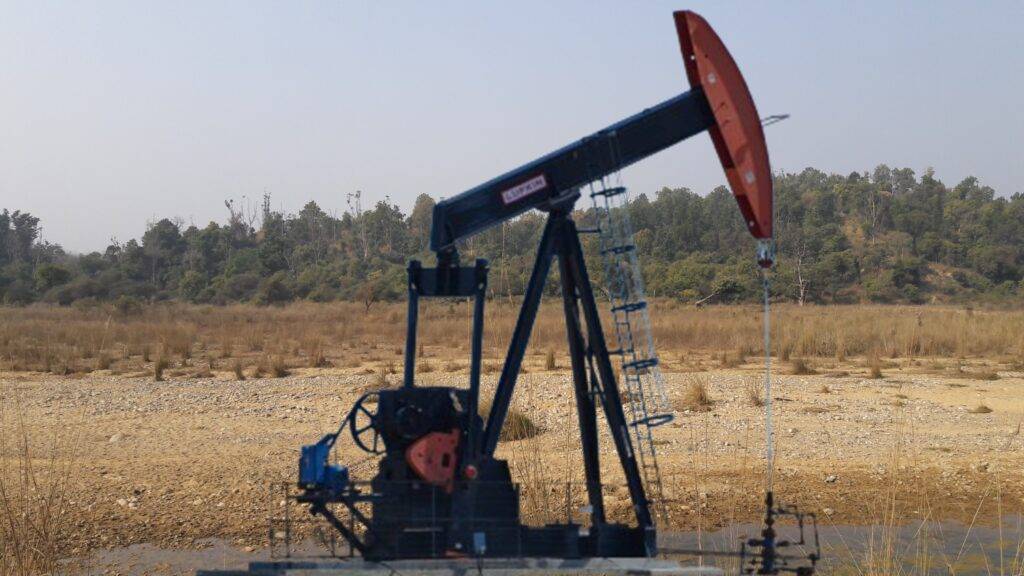
For more than a century, Fossil Fuels have powered industrial growth, transportation, and economic development across the globe. However, this dependence comes with significant Environmental Costs, including air pollution, greenhouse gas emissions, ecosystem degradation, and climate change. Exploring the relationship between Fossil Fuels and Environmental Costs is essential for understanding the environmental consequences of energy use and the challenges of transitioning towards a more sustainable future. These issues remain central to UGC-NET/JRF, SLET, ARS, GATE, and other competitive examinations.
Use this curated MCQ bank to test your conceptual understanding, identify weak areas, and sharpen your exam readiness.
Syllabus Outline
- Environmental costs associated with fossil fuel extraction, processing, and consumption.
- Global distribution, reserves, and production trends of fossil fuels (e.g. coal, oil, and natural gas).
- Environmental impacts of fossil fuel extraction (e.g. habitat destruction, water pollution, and land degradation).
- Emissions of greenhouse gases and climate change.
- Socio-economic implications of fossil fuel dependency and alternative energy sources and technologies.
- Policy frameworks, international agreements, and transition strategies to a more sustainable energy future.
Quick Study Guide
Fossil fuels are hydrocarbon-rich energy reservoirs whose extraction and combustion drive severe global environmental perturbations. Quantifying their environmental costs requires analysing the thermodynamic, chemical, and atmospheric principles that govern pollutant emissions, radiative forcing, and biogeochemical degradation across ecosystems.
- Hydrocarbon Combustion and Radiative Forcing: Complete combustion converts chemical energy into thermal energy, yielding carbon dioxide and water vapour as primary products. The accumulation of anthropogenic CO2 alters Earth’s radiative equilibrium by absorbing outgoing longwave infrared radiation, driving positive radiative forcing and accelerating global climate disruption.
- Sulfur and Nitrogen Oxide Kinetics: High-temperature combustion of coal and petroleum releases SO2 and NOx from fuel-bound heteroatoms and atmospheric thermal fixation. These gases undergo atmospheric oxidation to synthesise secondary pollutants, sulfuric acid and nitric acid, which precipitate as acid deposition, lowering the pH of aquatic systems and leaching essential nutrients from soils.
- Particulate Matter and Aerosol Effects: Fossil fuel combustion generates primary aerosols, including fine particulate matter (PM2.5 and PM10) and black carbon (soot). While sulfate aerosols exhibit a cooling effect by scattering incoming shortwave solar radiation, black carbon acts as a warming agent by absorbing solar flux and lowering surface albedo when deposited on snow and ice sheets.
- Trace Metal Mobilisation: Coal combustion volatilizes toxic trace elements originally trapped within the organic or mineral matrix of the rock. Elements such as elemental mercury, arsenic, and lead are released into the atmosphere, undergo long-range transport, and deposit into aquatic systems where they undergo microbial methylation into highly neurotoxic methylmercury, causing severe bioaccumulation up trophic webs.
- Extraction Fugitive Emissions and Ecotoxicity: Fossil fuel exploitation incurs heavy ecological tolls before combustion. Subsurface coal mining triggers acid mine drainage through pyrite oxidation, while petroleum extraction and transport risk crude oil spills that release hydrophobic polycyclic aromatic hydrocarbons (PAHs), which exhibit long-term environmental persistence, mutagenicity, and acute ecotoxicity.
Test Your Knowledge
This quiz contains 25 concept-based MCQs on “Fossil Fuels and Environmental Costs“. Each question has a single correct/most appropriate answer.
*****
1. What is the process by which coal is heated in the absence of oxygen to produce coke, a fuel used in blast furnaces for iron smelting?
a) Carbonisation
b) Pyrolysis
c) Gasification
d) Liquefaction
2. Which of the following continents holds the largest reserves of coal?
a) South America
b) Asia
c) Europe
d) North America
3. Which fossil fuel is typically found in tar sands?
a) Petroleum
b) Coal
c) Oil shale
d) Natural gas
4. Which type of coal has the highest carbon content and energy density?
a) Anthracite
b) Bituminous
c) Subbituminous
d) Lignite
5. Which region has the largest reserves of natural gas, making it a key player in global natural gas production trends?
a) Middle East
b) Europe
c) North America
d) Africa
6. Which of the following is a byproduct of burning coal that can contribute to respiratory problems?
a) Carbon dioxide
b) Sulfur dioxide
c) Oxygen
d) Nitrogen
7. What is the process of extracting oil from unconventional sources such as oil shale and tar sands?
a) Primary recovery
b) Tertiary recovery
c) Enhanced oil recovery
d) Secondary recovery
8. Which fossil fuel is primarily composed of kerogen?
a) Coal
b) Oil shale
c) Natural gas
d) Petroleum
9. Which air pollution is caused by a combination of nitrogen oxides and volatile organic compounds in the presence of sunlight?
a) Smog
b) Acid rain
c) Ozone depletion
d) Greenhouse effect
10. What is the main environmental impact of burning coal for electricity generation?
a) Coral reef bleaching
b) Deforestation
c) Groundwater contamination
d) Acid rain
11. In terms of oil reserves, which region holds the second-largest share after the Middle East, according to recent geological surveys?
a) Africa
b) Asia-Pacific
c) South America
d) North America
12. What is the primary environmental concern associated with the combustion of peat, a precursor to coal, often used as a fuel in some regions?
a) Ozone depletion
b) Acid rain
c) Soil erosion
d) Greenhouse gas emissions
13. Assertion (A): The extraction of fossil fuels often involves environmentally destructive techniques such as fracking and strip mining.
Reasoning (R): Fracking, a method used to extract natural gas from shale formations, can contaminate groundwater and induce seismic activity. Strip mining for coal removes entire layers of soil and rock, leading to habitat destruction and ecosystem disruption.
a) Both the A and R are correct, but the R does not explain the A.
b) Both the A and R are correct, and the R explains the A.
c) The A is incorrect, but the R is correct.
d) The A is correct, but the R is incorrect.
14. Which of the following pollutants is released during coal combustion and contributes to the formation of ground-level ozone?
a) Carbon monoxide
b) Sulfur dioxide
c) Particulate matter
d) Nitrogen oxides
15. Considering production trends, which fossil fuel has shown the highest growth rate in recent years, driven by increasing demand from emerging economies?
a) Oil
b) Natural gas
c) Coal
d) Liquefied natural gas
16. Assertion (A): Fossil fuel extraction, processing, and consumption have high environmental costs.
Reasoning (R): The combustion of fossil fuels releases greenhouse gases such as carbon dioxide, contributing to global warming and climate change. Additionally, extraction methods such as mountaintop removal for coal mining and oil and gas drilling can result in habitat destruction and soil erosion.
a) Both A and R are correct, and R explains A.
b) A is correct, but R is incorrect.
c) Both A and R are correct, but R does not explain A.
d) A is incorrect, but R is correct.
17. What is the name of the process by which oil and natural gas are naturally formed from organic matter over millions of years?
a) Crystallisation
b) Fossilisation
c) Desalination
d) Diagenesis
18. What is the primary environmental concern associated with the release of methane during coal mining operations?
a) Groundwater contamination
b) Greenhouse gas emissions
c) Soil erosion
d) Air pollution
19. What is the process by which organic material is converted into coal under high pressure and temperature?
a) Combustion
b) Carbonisation
c) Oxidation
d) Fossilisation
20. What is the primary environmental concern associated with coal ash disposal?
a) Air pollution
b) Soil erosion
c) Groundwater contamination
d) Coral reef bleaching
21. Which of the following countries is the largest producer of crude oil, contributing significantly to global production trends?
a) Saudi Arabia
b) China
c) United States
d) Russia
22. According to the U.S. Energy Information Administration, what percentage of global proved oil reserves is held by Organisation of the Petroleum Exporting Countries members?
a) Nearly 90%
b) Approximately 40%
c) Approximately 60%
d) Approximately 80%
23. Which country is the largest producer of coal?
a) Russia
b) United States
c) India
d) China
24. What is the primary component of natural gas?
a) Butane
b) Ethane
c) Methane
d) Propane
25. What is the primary method to reduce the oil viscosity of oil sands during extraction?
a) In-situ combustion
b) Hydraulic fracturing
c) Open-pit mining
d) Steam Assisted Gravity Drainage
*****
Previous: Solar Energy and Environmental Resilience
Next: Shale Oil, Coal Bed Methane and Gas Hydrates
References
- Edward A. Keller (2022). Introduction to Environmental Geology, Pearson, 5th Edition.
- Sharma, P. D. (2017). Environmental Biology and Toxicology, Rastogi Publications, 3rd Edition.
- De, Anil Kumar and De, Arnab Kumar (2024). Environmental Chemistry, New Age International, 11th Edition.
- Odum, Eugene P., and Barrett, Gary W. (2004). Fundamentals of Ecology, Thomson Brooks/Cole, 5th Edition.
- Singh, J.S., Gupta, S.R., Singh, S.P. & Singh, R. (2026). Ecology, Environmental Science and Conservation, S Chand Publishing, 2nd Edition.
- Erach Bharucha (2017). Environmental Studies, Universities Press, 4th Edition.
🔗 Explore More MCQs: