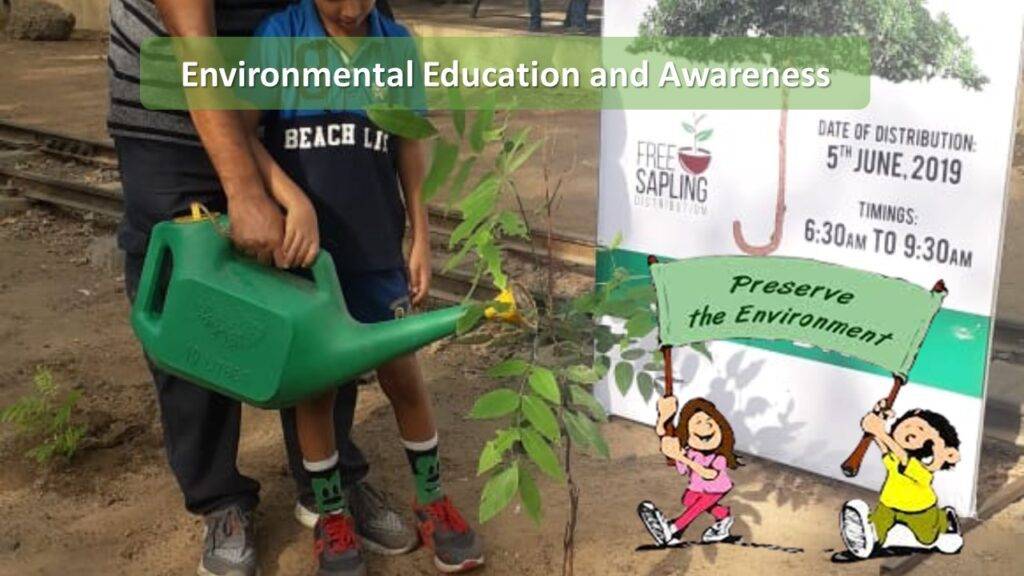
Promoting environmental education and awareness is the cornerstone of fostering sustainable behaviour, shaping conservation ethics, and addressing global ecological challenges. Mastering the core frameworks, international conferences, and historical milestones of environmental literacy is crucial for UGC-NET/JRF, SLET, GATE, and other competitive examinations.
Use this curated MCQ bank to test your conceptual depth, identify weak areas, and sharpen your exam readiness.
Syllabus outline
- Interdisciplinary nature and relevance of environmental education.
- Goals and principles of environmental education.
- Curriculum development and design in environmental education.
- Integration of environmental education into formal and informal education systems (e.g., experiential learning, field trips, and outdoor education)
- Role-playing, simulations, and case studies in environmental education.
- Utilisation of media, technology, and social networks for environmental education.
- Environmental documentaries, campaigns, and awareness programs.
- Role of environmental education in shaping policies and regulations.
- Initiatives at the national and international levels.
- Engaging communities in environmental education and awareness programs.
Quick Study Guide
Environmental education and awareness form the critical bridge between scientific research and sustainable public policy. This domain focuses on the systematic processes to impart knowledge about ecological systems, natural resource management, and environmental degradation. Understanding the pedagogical frameworks, international declarations, and community-based strategies is essential for evaluating how complex scientific data is translated into actionable conservation practices, consumer behaviour, and environmental stewardship.
- Global Frameworks and Declarations: The formal structure of environmental education is deeply rooted in key international agreements. The 1972 Stockholm Conference first recognised environmental education as essential for global management. This was subsequently formalised by the Belgrade Charter (1975) and the Tbilisi Declaration (1977), which established the fundamental objectives of awareness, knowledge, attitudes, skills, and participation that guide global environmental pedagogy today.
- Formal vs. Non-Formal Pedagogies: Environmental knowledge is transmitted through two distinct pathways. Formal education integrates ecological concepts directly into academic curricula, from primary schools to university degrees. Non-formal education operates outside traditional schooling, utilising nature camps, eco-clubs, and community workshops. Non-formal approaches rely heavily on experiential learning for adult literacy and mobilise general public awareness.
- Grassroots Movements and NGO Interventions: Public awareness is frequently catalysed by grassroots environmental movements and NGOs. Historic Environmental Movements of India, such as the Chipko and Appiko movements or the Narmada Bachao Andolan, highlight the critical role of community-led action in forest conservation and challenging unsustainable infrastructure. NGOs bridge the gap between scientific conservation goals and local community action.
- Eco-Labeling and Consumer Awareness: Environmental awareness extends directly into market behaviour through eco-labelling programs, which certify products that meet strict ecological standards. In India, the ‘Ecomark’ scheme (represented by an earthen pitcher) is issued by the Bureau of Indian Standards to identify environmentally friendly consumer goods. These tools educate buyers, reduce industrial ecological footprints, and drive sustainable consumption.
- Public Participation in Environmental Governance: A core outcome of environmental awareness is enabling informed public participation in legal and policy decisions, most notably through the EIA process. Public hearings are a mandatory component of the EIA framework, ensuring that local communities are educated about the potential ecological hazards of proposed industrial projects and possess a legal platform to voice environmental concerns.
Test Your Knowledge
This quiz contains 25 concept-based MCQs on “Environmental Education and Awareness”. Each question has a single correct/most appropriate answer.
1. Which approach involves creating awareness about environmental issues through public service announcements, advertisements, and social media?
a) Non-formal education
b) Environmental education
c) Green marketing
d) Environmental regulation
2. Why is environmental education considered essential for children?
a) Environmental education is only relevant to adults.
b) Early exposure to environmental education can shape lifelong attitudes and behaviours.
c) Children are too young to understand complex environmental concepts.
d) Children are not affected by environmental issues.
3. What is the key difference between non-formal and formal environmental education?
a) Formal education focuses on traditional subjects, while non-formal education focuses on the environment.
b) Formal education is structured, while non-formal education is not structured.
c) Non-formal education is carried out in a formal classroom setting.
d) Non-formal education is only for young learners, while formal education is for all age groups.
4. Which educational approach involves learning in an outdoor environment?
a) Informal education
b) Non-formal education
c) Experiential education
d) Formal education
5. Which approach emphasises connecting learners with nature and natural processes?
a) Non-formal education
b) Online Education
c) Formal education
d) Experiential education
6. Which strategy involves organising events and activities to engage the public in environmental issues?
a) Non-formal education
b) Environmental regulations
c) Awareness campaigns
d) Informal education
7. What is the primary role of environmental education in promoting ecological restoration?
a) Promoting the degradation of ecosystems for economic benefits
b) Fostering awareness about ecological degradation and promoting restoration efforts
c) Ignoring the importance of restoring degraded ecosystems
d) Focusing solely on urban environments and disregarding natural ecosystems
8. Which statement about environmental education and awareness is correct?
a) Environmental education and awareness aim to promote sustainable behaviours.
b) Environmental awareness is unrelated to individual actions.
c) Environmental education only focuses on scientific knowledge about the environment.
d) Environmental education is limited to classroom instruction.
9. Which approach involves incorporating environmental issues into cultural and religious practices?
a) Environmental regulation
b) Environmental education
c) Green marketing
d) Ethnoecology
10. Which approach involves using games, simulations, and interactive activities to educate about environmental issues?
a) Traditional education
b) Experiential education
c) Non-formal education
d) Informal education
11. Which strategy involves using multimedia, social media, and campaigns to inform the public about environmental issues?
a) Informal education
b) Experiential education
c) Online Education
d) Formal education
12. What is the primary role of environmental education in addressing justice?
a) Ignoring disparities in access to environmental resources
b) Highlighting the exclusion of marginalised communities from environmental issues
c) Fostering awareness about the connection between social and environmental inequalities and promoting inclusive actions
d) Focusing solely on economic development
13. Which statement is true about environmental education in rural areas?
a) It addresses local environmental issues and traditional knowledge.
b) It is irrelevant in rural contexts.
c) It focuses on agriculture only.
d) Rural communities do not engage in environmental awareness activities.
14. What is the primary focus of education for sustainable development?
a) Teaching traditional ecological knowledge
b) Highlighting the importance of economic growth
c) Equipping individuals to address social, economic, and environmental challenges
d) Preparing students for traditional careers
15. What role does environmental education play in enhancing ecological literacy?
a) It does not contribute to ecological literacy.
b) It helps individuals understand ecological concepts and relationships.
c) It solely focuses on environmental policies.
d) It emphasises the memorisation of scientific facts.
16. Which approach involves creating educational programs for adults outside formal institutions?
a) Online Education
b) Experiential education
c) Formal education
d) Non-formal education
17. Which statement is true?
a) Environmental education does not address energy-related issues.
b) Environmental education encourages wasteful energy consumption.
c) Environmental education only focuses on traditional energy sources.
d) Environmental education raises awareness about the importance of energy conservation and renewable energy sources.
18. What role does environmental education play in promoting sustainable consumption?
a) It does not address consumption patterns.
b) It focuses solely on economic growth.
c) It encourages overconsumption and waste generation.
d) It raises awareness about the impact of consumption and promotes responsible choices.
19. Which approach involves using incentives to encourage environmentally friendly behaviours?
a) Environmental policy-making
b) Environmental education
c) Environmental advertising
d) Environmental regulation
20. Which educational approach is characterised by self-directed learning?
a) Informal education
b) Online Education
c) Non-formal education
d) Formal education
21. Which strategy involves integrating environmental education into business practices and decision-making?
a) Green advertising
b) Traditional education
c) Environmental marketing
d) Informal education
22. Why is it important to integrate environmental education into school curricula?
a) Environmental issues are separate from other societal challenges.
b) Environmental education is not relevant to academic subjects.
c) Environmental issues are interconnected with social, economic, and cultural aspects.
d) Environmental education is only for those interested in science.
23. Which approach involves using peer-to-peer communication to promote sustainable behaviours?
a) Social marketing
b) Environmental education
c) Non-formal education
d) Green marketing
24. Which strategy involves integrating environmental education into community development projects?
a) Informal education
b) Environmental regulation
c) Community-based education
d) Traditional education
25. What is the role of environmental education in biodiversity conservation?
a) Environmental education raises awareness about the importance of biodiversity conservation.
b) Environmental education encourages exploiting biodiversity for economic gains.
c) Environmental education is limited to urban settings and does not impact biodiversity.
d) Environmental education discourages engagement in conservation activities.
Previous: Principles of Remote Sensing and GIS
Next: Environmental ethics
References
- Aggarwal, J. C. (2024). Education for Values, Environment and Human Rights, Shipra Publication, 1st edition.
- Erach Bharucha (2017). Environmental Studies, Universities Press, 4th edition
🔗 Explore More MCQs: