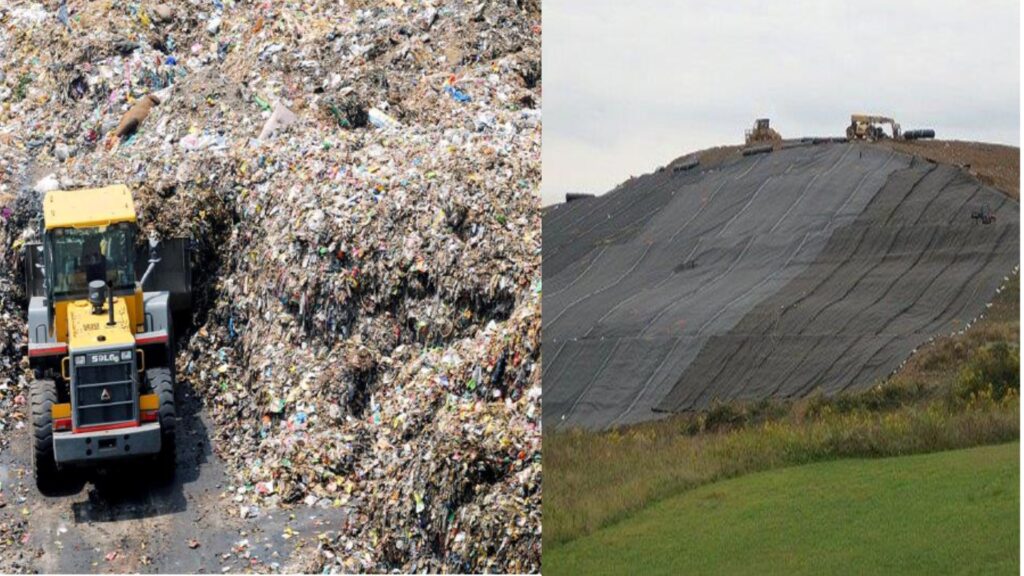
Where does waste go when recycling, recovery, and treatment options are no longer feasible? Disposal of Solid and Hazardous Wastes addresses this critical question by examining the final stage of waste management, where environmental protection and public safety become paramount. From sanitary landfills and secure hazardous waste landfills to stabilisation, encapsulation, and long-term containment strategies, proper disposal practices are essential for preventing soil, water, and air contamination. Understanding these disposal methods and their environmental implications is crucial for sustainable waste management and for success in UGC-NET/JRF, SLET, ARS, GATE, and other competitive examinations.
Use this curated MCQ bank to assess your conceptual understanding, identify knowledge gaps, and strengthen your preparation for competitive examinations.
Syllabus Outline
- Contemporary techniques for waste treatment, recycling, and resource recovery.
- Landfill design & operation and incineration processes.
- Recent treatment technologies include composting, anaerobic digestion, and pyrolysis.
- Environmental and health impacts of waste disposal.
- Regulatory frameworks and policies governing waste management.
Quick Study Guide
Safe waste disposal requires isolating toxic compounds and municipal refuse from the biosphere using advanced geological barriers, engineered liner systems, and chemical stabilisation techniques.
- Sanitary Landfills and Liner Architecture: Modern landfills isolate municipal solid waste from groundwater using a multi-barrier system. A typical composite liner consists of a Geosynthetic Clay Liner or a thick compacted clay layer topped with a high-density polyethene geomembrane. This setup forms a strict hydraulic barrier that contains leachate, the highly contaminated fluid that drains from the decomposing waste mass.
- Leachate Collection Dynamics: Leachate forms when precipitation percolates through buried waste, stripping out heavy metals, complex organic compounds, and high COD loads. To prevent aquifer contamination, a sloped leachate collection network of perforated pipes buried in a gravel drainage layer continuously pumps this fluid to the surface for intensive wastewater treatment.
- Secure Landfills for Hazardous Waste: Hazardous waste disposal requires a “double-liner” configuration to maximise environmental containment. Secure landfills feature two independent composite liner systems separated by a leak detection zone (a highly porous geonet layer). If the primary upper geomembrane breaches, the leaking fluid is trapped in the detection layer and pumped out before it can breach the secondary bottom liner.
- Deep Well Injection Mechanics: Liquid hazardous wastes are often isolated via deep well injection. This technique pumps fluid waste under high pressure into deep, porous geological formations (e.g. sandstone) located thousands of feet below the lowest freshwater aquifer. The target formation must be bounded above and below by thick, impermeable caprock layers (e.g. shale) to block vertical migration.
- Solidification and Encapsulation: Before land disposal, hazardous materials undergo physical or chemical stabilisation to minimise contaminant mobility. Macroencapsulation coats the waste blocks in a durable, non-biodegradable synthetic jacket. For radioactive or highly toxic inorganic fractions, vitrification melts the waste with silica glass precursors at high temperatures (1100 –1400 °C), permanently locking the hazardous elements inside an unreactive, leach-proof glass matrix.
Test Your Knowledge
This quiz contains 25 concept-based MCQs on “Disposal of Solid and Hazardous Wastes“. Each question has a single correct/most appropriate answer.
*****
1. A secure landfill must have a minimum of _______ height separating the landfill base from underlying bedrock or a groundwater aquifer.
a) 5 m
b) 2 m
c) 3 m
d) 4 m
2. Underground injection of waste must be carried out at least ______away from an underground source of drinking water.
a) 400 m
b) 400 km
c) 40 km
d) 40 m
3. A long mound or stack of organic solid waste mixed with cattle dung and human excreta dumped on land is called:
a) Windrow
b) Secure landfill
c) Biomethanation
d) Pitchfork
4. Which method is most common in India to manage the solid waste collected from urban areas?
a) Land-filling
b) Incineration
c) Composting
d) Recycling and resource recovery
5. Which option is unsuitable for managing Construction and Demolition wastes?
a) Source Reduction
b) Composting
c) Recycling
d) Landfilling
6. Leachate recirculation in landfills aims to:
a) Increase waste biodegradation rate.
b) Reduce moisture content in the waste mass.
c) Enhance landfill stability and gas production.
d) Minimise the volume of landfilled waste.
7. What average percentage of the waste generated in India can be converted into compost?
a) 10%
b) 50%
c) 75%
d) 90%
8. Which of the following methods is considered most effective for reducing the long-term environmental impact of hazardous waste?
a) Incineration
b) Deep-well injection
c) Stabilisation/Solidification
d) Landfilling
9. Which of the following is a critical factor in the design of a landfill liner system?
a) Permeability
b) Thickness
c) Chemical resistance
d) All of the above
10. What is the purpose of thermal desorption in hazardous waste management?
a) Reduce the volume of waste
b) Extract contaminants from waste using heat
c) Neutralise acidic waste
d) Encapsulate hazardous materials
11. Which of the following hazardous waste disposal methods involves impermeable geological formations?
a) Landfilling
b) Deep-well injection
c) Composting
d) Incineration
12. Stabilisation/solidification processes are suitable for:
a) Organic liquid waste
b) Radioactive waste
c) Heavy metal-contaminated waste
d) Medical waste
13. Which international treaty aims to reduce the movement of hazardous waste between nations, especially from developed to less developed countries?
a) Montreal Protocol
b) Basel Convention
c) Kyoto Protocol
d) Stockholm Convention
14. The effectiveness of a landfill cap in preventing water infiltration is measured primarily by its:
a) Thickness
b) Permeability
c) Weight
d) All of the above
15. Which of the following is a significant concern related to the long-term storage of radioactive waste?
a) Biological degradation
b) Thermal instability
c) Radiation leakage
d) High flammability
16. The key difference between incineration and gasification of waste is:
a) Incineration requires higher temperatures than gasification
b) Gasification produces syngas, whereas incineration does not
c) Incineration generates more solid waste residues than gasification
d) Gasification emits more pollutants than incineration
17. Which process involves organic material’s thermal decomposition at elevated temperatures without oxygen?
a) Incineration
b) Gasification
c) Pyrolysis
d) Composting
18. In hazardous waste management, the purpose of using a geomembrane liner in a landfill is to:
a) Promote faster decomposition of waste
b) Enhance methane gas collection
c) Prevent the migration of contaminants
d) Facilitate the transport of waste
19. Which of the following is a common method for the disposal of asbestos-containing waste?
a) Incineration
b) Deep-well injection
c) Landfilling
d) Composting
20. Which hazardous waste treatment process is specifically designed to handle waste with high heavy metal content?
a) Anaerobic digestion
b) Phytoremediation
c) Stabilisation/Solidification
d) Incineration
21. Which material is most commonly used as a daily cover for landfills to control odour and pests?
a) Plastic sheets
b) Soil
c) Geotextile fabric
d) Gravel
22. Which type of landfill is specifically designed to prevent the escape of hazardous waste contaminants into the environment?
a) Sanitary landfill
b) Secure landfill
c) Bioreactor landfill
d) Open dump
23. The term monofil refers to a landfill that:
a) Contains only one type of waste
b) Is designed for organic monomer waste
c) Is used for inert materials only
d) Uses a single-liner system
24. Which method is typically used to dispose of mercury-containing waste?
a) Incineration
b) Deep-well injection
c) Stabilisation and landfilling
d) Composting
25. Which type of hazardous waste is commonly treated using vitrification?
a) Radioactive waste
b) Organic solvents
c) Heavy metals
d) Medical waste
*****
Previous: Electrical Energy from Solid Waste
Next: Hazardous Waste Management
References
- Gupta, O.P. (2023). Elements of Solid & Hazardous Waste Management, Khanna Publishing House, 1st Edition.
- De, Anil Kumar and De, Arnab Kumar (2024). Environmental Chemistry, New Age International, 11th Edition.
- APHA (2022). Standard Methods for the Examination of Water and Wastewater. 24th Edition, American Public Health Association.
- Singh, J.S., Gupta, S.R., Singh, S.P. & Singh, R. (2026). Ecology, Environmental Science and Conservation, S Chand Publishing, 2nd Edition.
- Erach Bharucha (2017). Environmental Studies, Universities Press, 4th Edition.
🔗 Explore More MCQs: