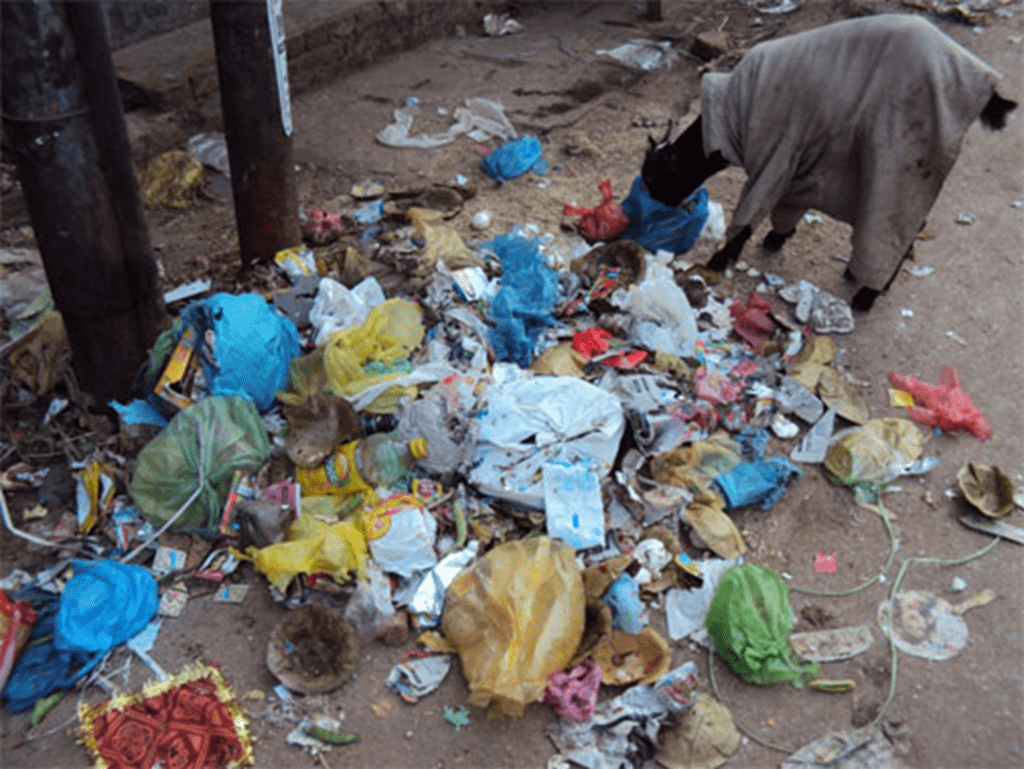
What makes a waste material merely a disposal problem in one case and a serious environmental hazard in another? Characterisation of Solid and Hazardous Waste provides the scientific basis for identifying, classifying, and assessing waste materials based on their physical, chemical, and toxicological properties. Understanding waste characteristics is essential for selecting appropriate treatment, storage, transportation, and disposal methods while minimising risks to human health and the environment. These concepts form a critical component of waste management and are highly relevant for UGC-NET/JRF, SLET, ARS, GATE, and other competitive examinations.
Use this curated MCQ bank to test your conceptual understanding, identify weak areas, and sharpen your exam readiness.
Syllabus Outline
- Sources and classification of hazardous waste.
- Physical Characterisation of Solid Waste (e.g. particle size, density and moisture content).
- Chemical composition: organic and inorganic constituents.
- Analytical techniques for chemical characterisation.
- Biological components and biodegradability of solid waste.
- Methods for assessing biological characteristics.
- Hazardous Waste Identification and Classification.
Quick Study Guide
Waste characterisation involves evaluating the physical, chemical, and thermodynamic properties of solid waste streams to determine their recycling potential, energy content, and environmental toxicity thresholds.
- Physical Parameters and Landfill Hydraulics: Solid waste management requires bulk density and field capacity. Bulk density (mass per unit volume) dictates the compaction efficiency and overall volume required in landfills. Field capacity is the maximum amount of moisture that a waste matrix can retain against the pull of gravity. When the moisture content exceeds this specific threshold, gravity drives the excess water downward, generating highly contaminated leachate.
- Chemical Profiling (Proximate and Ultimate Analysis): Before choosing a thermal treatment method, waste must undergo chemical characterisation:
- Proximate Analysis: Quantifies volatile matter, fixed carbon, moisture, and ash content by heating the sample at specific temperatures.
- Ultimate Analysis: Determines the exact elemental mass fractions of carbon, hydrogen, oxygen, nitrogen, and sulfur. This is crucial for calculating stoichiometric oxygen requirements and predicting air pollutant emissions like SOx and NOx.
- Energy Quantification (Heating Values): The thermal energy potential of solid waste is determined using bomb calorimetry. Higher Heating Value represents the total gross thermal energy released during combustion, including the latent heat of vaporisation of the water contained in the waste. Lower Heating Value subtracts this latent heat, providing a realistic measure of the net useful energy available for waste-to-energy recovery.
- Regulatory Hazardous Criteria (RCRA Framework): Under environmental regulations, solid waste is classified as hazardous if it exhibits any of four defined scientific criteria:
- Ignitability: Presents a fire hazard during routine handling (e.g., flash point < 60 °C).
- Corrosivity: Highly acidic or basic liquids capable of corroding steel containers (pH ≤ 2 or ≥ 12.5).
- Reactivity: Unstable under normal conditions; undergoes violent chemical shifts or reacts explosively with water.
- Toxicity: Contains specific toxic heavy metals or organic compounds that can readily leach into the environment.
- Toxicity Characteristic Leaching Procedure (TCLP): The TCLP is a standardised analytical chemical extraction test designed to simulate the liquid leaching conditions inside a municipal landfill. The waste sample is co-extracted with a buffered acetic acid fluid under continuous mechanical agitation. The resulting liquid extract is then analysed using advanced spectroscopy to measure whether heavy metals leach out at concentrations exceeding permissible limits.
Test Your Knowledge
This quiz contains 25 concept-based MCQs on “Characterisation of Solid and Hazardous Waste“. Each question has a single correct/most appropriate answer.
*****
1. A typical passenger tyre contains a maximum amount of:
a) Styrene-butadiene
b) Carbon black
c) Aromatic oil
d) Zinc oxide
2. Which of the following wastes contains the highest C/N ratio (weight/weight)?
a) Sawdust
b) Fruit wastes
c) Leaves
d) Sewage sludge
3. Which freshly collected waste contains the highest moisture percentage?
a) Shrub trimmings
b) Cornstalks
c) Fruit wastes
d) Paper waste
4. Which of the following methods is commonly used to determine the moisture content of solid waste?
a) Gravimetric analysis
b) Spectroscopic analysis
c) Chromatographic analysis
d) Titration
5. What is the primary purpose of proximate analysis on solid waste?
a) To determine the chemical composition
b) To assess the calorific value
c) To identify the presence of heavy metals
d) To measure the moisture content
6. Which of the following is most harmful?
a) Animal waste
b) Excess fertilisers
c) Domestic sewage
d) Non-biodegradable waste
7. What kind of waste is termed Municipal Solid Waste?
a) Hazardous
b) Non-Hazardous
c) All solid waste generated from municipal areas.
d) All solid waste generated from industrial areas under the municipality.
8. Which of the following components of solid waste contributes the most to its calorific value?
a) Moisture
b) Volatile matter
c) Fixed carbon
d) Ash
9. What is the primary method used to determine the calorific value of solid waste?
a) Bomb calorimetry
b) Spectroscopy
c) Gravimetric analysis
d) Titrations
10. Which of the following characteristics is NOT typically assessed during the characterisation of solid waste?
a) Particle size distribution
b) Moisture content
c) Radioactivity
d) Density
11. Which of the following methods is commonly used to determine the heavy metal content of solid waste?
a) X-ray fluorescence spectroscopy
b) Gas chromatography
c) Atomic absorption spectroscopy
d) Mass spectrometry
12. What is the primary purpose of conducting leachate analysis on solid waste?
a) To determine the moisture content
b) To assess the potential for groundwater contamination
c) To measure the calorific value
d) To identify heavy metal concentrations
13. Which of the following methods is commonly used to determine the organic matter content of solid waste?
a) Gravimetric analysis
b) Titration
c) FTIR
d) GC-MS
14. What is the primary method used to determine the particle size distribution of solid waste?
a) Sieving
b) Filtration
c) Centrifugation
d) Sedimentation
15. What is the primary purpose of pH analysis on solid waste?
a) To assess the potential for odour generation
b) To determine the moisture content
c) To evaluate the potential for leaching of contaminants
d) To measure the organic matter content
16. Which of the following is NOT typically considered a component of solid waste?
a) Paper
b) Plastic
c) Soil
d) Metal
17. Which of the following statements is correct regarding the relationship between solid waste particle size distribution and environmental fate?
a) Smaller particles degrade faster due to increased surface area for microbial activity.
b) Larger particles degrade faster due to higher internal temperatures during decomposition.
c) Particle size has no significant influence on biodegradation rates in landfills.
d) All waste particles, regardless of size, degrade at the same rate in anaerobic conditions.
18. Which waste characteristic would be MOST relevant for designing an effective sorting system?
a) Bulk density of the waste stream.
b) Chemical composition of the waste materials.
c) Biodegradability of the individual waste components.
d) Magnetic or electrical properties of the materials.
19. Calorific value refers to:
a) Heat generated during waste incineration.
b) Energy content of a waste material.
c) Rate of waste decomposition in landfills.
d) Toxicity level of leachate.
20. What is the primary limitation of manual sorting methods for waste characterisation?
a) High-cost
b) Low accuracy
c) Labour-intensive process
d) Not suitable for all waste types
21. What is the primary purpose of conducting heavy metal analysis on solid waste samples?
a) To determine the waste composition
b) To assess potential health risks
c) To estimate waste volume
d) To identify waste sources
22. The heavy metal content of a solid waste sample is determined to be 80 ppm. If the mass of the sample is 500 kg, what is the mass of heavy metals in the sample?
a) 6.25 kg
b) 6.25 g
c) 40 g
d) 40 kg
23. A solid waste sample has a moisture content of 18% and an ash content of 12%. If the mass of the wet sample is 800 kg, what is the mass of dry solids in the sample?
a) 512 kg
b) 576 kg
c) 656 kg
d) 704 kg
24. Assertion (A): High moisture content in municipal solid waste promotes rapid biodegradation.
Reasoning (R): Microorganisms require moisture for optimal activity in landfills.
a) Both A and R are true, and R is a correct explanation of A.
b) Both A and R are true, but R is not a correct explanation of A.
c) A is true, but R is false.
d) A is false, but R is true.
25. Assertion (A): Waste with a high bulk density is preferable for landfilling.
Reasoning (R): Denser waste requires less space in landfills, maximising landfill capacity.
a) Both A and R are true, and R is a correct explanation of A.
b) Both A and R are true, but R is not a correct explanation of A.
c) A is true, but R is false.
d) A is false, but R is true.
*****
Previous: Radioactive, Thermal and Marine Pollution
Next: Solid Waste Collection and Transportation
References
- Gupta, O.P. (2023). Elements of Solid & Hazardous Waste Management, Khanna Publishing House, 1st Edition.
- De, Anil Kumar and De, Arnab Kumar (2024). Environmental Chemistry, New Age International, 11th Edition.
- APHA (2022). Standard Methods for the Examination of Water and Wastewater. 24th Edition, American Public Health Association.
- Singh, J.S., Gupta, S.R., Singh, S.P. & Singh, R. (2026). Ecology, Environmental Science and Conservation, S Chand Publishing, 2nd Edition.
- Erach Bharucha (2017). Environmental Studies, Universities Press, 4th Edition.
🔗 Explore More MCQs: