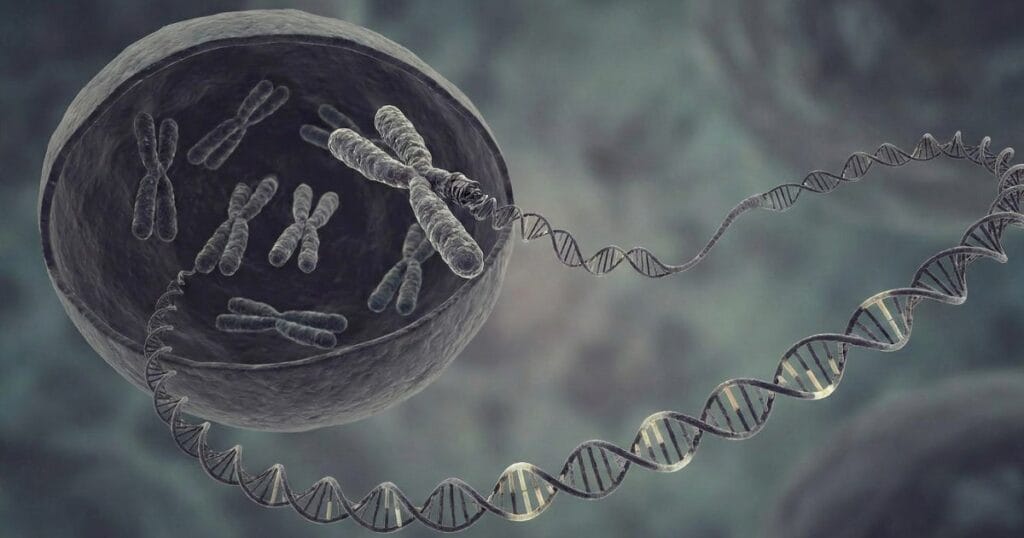
COMPETITIVE EXAM MCQs SERIES of LIFE SCIENCES for CSIR-UGC NET/JRF, SLET, GATE, and other entrance tests – CELLULAR ORGANIZATION – Organisation of Genes and Chromosomes.
Syllabus Outline
- Operon unique and repetitive DNA.
- Interrupted genes and gene families.
- Structure of chromatin and chromosomes.
- Heterochromatin, euchromatin and transposons.
This quiz contains concept-based, most frequently asked 25 MCQs of “CELLULAR ORGANIZATION – Organisation of Genes and Chromosomes”. Each question has a single correct/most appropriate answer.
*****
1. In the trp operon, which mutation would cause constitutive attenuation, i.e., transcription always terminates in the leader region even when tryptophan is low?
A) Deletion of the two Trp codons in the leader peptide
B) Mutation in the operator that prevents TrpR binding
C) Mutation that destabilises the 3:4 terminator hairpin
D) Mutation in the 2:3 stem-loop so that it cannot form
2. Which statements about CRP–cAMP in the lac operon are correct?
I – CRP–cAMP binds near the promoter only when glucose is low.
II – CRP–cAMP binding bends DNA by about 90°.
III – CRP–cAMP is required for repressor binding to the operator.
IV – CRP–cAMP interacts with the C-terminal domain of the RNA polymerase α subunit.
A) I, II and IV
B) I and III only
C) II and IV only
D) I, II, III and IV
3. Assertion (A): A lacZ⁻ mutation often shows a polar effect, lowering expression of the downstream lacY and lacA genes.
Reason (R): The lac operon mRNA is polycistronic, and a nonsense mutation can cause premature Rho-dependent termination, blocking transcription of downstream genes.
A) Both A and R are true, and R correctly explains A.
B) Both A and R are true, but R does not explain A.
C) A is true, but R is false.
D) A is false, but R is true.
4. Which class of repetitive DNA consists of 10–100 bp tandem repeats and is widely used in DNA fingerprinting?
A) Microsatellites
B) Minisatellites
C) Retrotransposons
D) Segmental duplications
5. Which statements about eukaryotic genome organisation are correct?
I – Unique sequences include protein-coding regions as well as introns and other non-coding regions.
II – Gene families such as globins and histones arise by gene duplication and divergence.
III – Pseudogenes are functional backup copies of genes.
IV – Microsatellites are often generated by replication slippage.
A) I, II and IV
B) I and III only
C) II and IV only
D) I, II, III and IV
6. In a CsCl density gradient with fragmented genomic DNA, a separate satellite band is observed. Why does it separate from the main band?
A) It is circular DNA, while the main band is linear.
B) It has a markedly different GC content.
C) It is specifically bound by histones.
D) It is highly methylated.
7. Which process is mainly responsible for the concerted evolution of tandemly repeated gene families such as rRNA genes?
A) Unequal crossing over
B) Independent assortment
C) Transposition
D) RNA interference
8. Human telomeres contain many repeats of TTAGGG. Which protein complex protects telomeres from being recognised as double-strand breaks?
A) Cohesin
B) Shelterin
C) NURF remodelling complex
D) Condensin
9. Approximately what fraction of the human genome consists of transposable elements?
A) 1–2%
B) 10%
C) 45–50%
D) 90%
10. Which histone modifications are correctly matched with their typical transcriptional outcome?
I – H3K9 acetylation → transcriptional activation
II – H3K27 trimethylation → Polycomb-mediated repression
III – H3K9 trimethylation → heterochromatin formation
IV – H3K4 trimethylation → transcriptional repression
A) I, II and III
B) I and IV only
C) II and III only
D) I, II, III and IV
11. Which protein domain specifically recognises acetylated lysine on histone tails?
A) Chromodomain
B) Bromodomain
C) PHD finger
D) Tudor domain
12. Assertion (A): The histone variant H2A.X is rapidly phosphorylated (γ-H2A.X) at sites of DNA double-strand breaks.
Reason (R): Phosphorylated H2A.X recruits DNA repair proteins such as the MRN complex to the damage site.
A) Both A and R are true, and R correctly explains A.
B) Both A and R are true, but R does not explain A.
C) A is true, but R is false.
D) A is false, but R is true.
13. Position-effect variegation in Drosophila occurs when the white gene is moved near heterochromatin. Which mutation would most likely suppress variegation and restore uniform red eye colour?
A) Null mutation in the gene encoding HP1
B) Increased expression of an H3K9 histone methyltransferase
C) Deletion of the white gene promoter
D) Mutation in a histone deacetylase
14. Which histone is the linker histone that binds DNA at the entry/exit of the nucleosome and promotes 30-nm fibre formation?
A) H2A
B) H3
C) H4
D) H1
15. The Solenoid and Zigzag models describe the structure of which chromatin fibre?
A) 10-nm beads-on-a-string fibre
B) 30-nm chromatin fiber
C) Looped domains anchored to the scaffold
D) Synaptonemal complex
16. If histone H4 synthesis is blocked in a cell, what is the immediate effect on nucleosome assembly?
A) H3 tetramers form but cannot bind DNA
B) H2A–H2B dimers assemble onto DNA alone
C) Nucleosome assembly stops
D) H1 replaces H4 in the core particle
17. The puffs seen in polytene chromosomes of Drosophila salivary glands represent:
A) Constitutive heterochromatin regions
B) Sites of active RNA synthesis
C) Sites of DNA replication
D) Paired homologous chromosomes during meiosis
18. Which type of intron can behave as a mobile genetic element by encoding a homing endonuclease?
A) Group I introns
B) Group II introns
C) Spliceosomal introns
D) tRNA introns
19. Which statement best describes centromeres in higher eukaryotes such as humans?
A) A defined 125 bp CDE sequence
B) Megabase-sized arrays of α-satellite repeats
C) Regions with high gene density
D) Unique sequences recognised by the origin recognition complex
20. Which statements about Short Interspersed Nuclear Elements are correct?
I – They are non-autonomous retrotransposons.
II – The Alu element is the most abundant Short Interspersed Nuclear Element in humans.
III – They originated from RNA polymerase III transcripts.
IV – They encode reverse transcriptase.
A) I Only
B) I and II
C) I, II and III
D) I, II, III and IV
21. The RNA component of telomerase functions primarily as:
A) A primer for DNA synthesis
B) A helicase
C) A catalytic ribozyme that cuts DNA
D) A template for DNA synthesis
22. Which features are NOT shared between Group II intron splicing and spliceosomal pre-mRNA splicing?
I – Catalysis by a protein-only complex
II – Initiation by nucleophilic attack from the 2′-OH of a branch-point adenosine
III – Formation of a lariat intermediate
IV – Two transesterification reactions
A) I Only
B) I and II
C) I, II and III
D) I, II, III and IV
23. What is the function of the Shine–Dalgarno sequence in prokaryotic mRNA?
A) Terminates transcription
B) Binds the repressor protein
C) Position the ribosome at the start codon
D) Marks the origin of replication
24. Which histone modification is classically associated with dosage compensation of the male X chromosome in Drosophila?
A) H4K16 acetylation
B) H3K27 methylation
C) H2A ubiquitination
D) DNA methylation
25. Which DNA polymerase in E. coli removes RNA primers and replaces them with DNA during nick translation?
A) DNA polymerase I
B) DNA polymerase III
C) DNA polymerase II
D) DNA polymerase V
*****
Previous: Organisation and Function of Intracellular Organelles
Next: Cell Division and Cell Cycle
References
- Geoffrey Cooper and Kenneth Adams (2022). The Cell: A Molecular Approach, Oxford University Press, 9th Edition.
- Nelson, David L. & Cox, Michael M. (2021). Lehninger Principles of Biochemistry, W. H. Freeman, 8th Edition.
- Willey, J. M., Sandman, K. M., & Wood, D. H. (2022). Prescott’s Microbiology, McGraw-Hill, 12th Edition
- Verma, P. S., & Agarwal, V. K. (2022). Cell Biology, Genetics, Molecular Biology, Evolution and Ecology, S. Chand Publishing, Revised Edition.
🔗 Explore More MCQs: