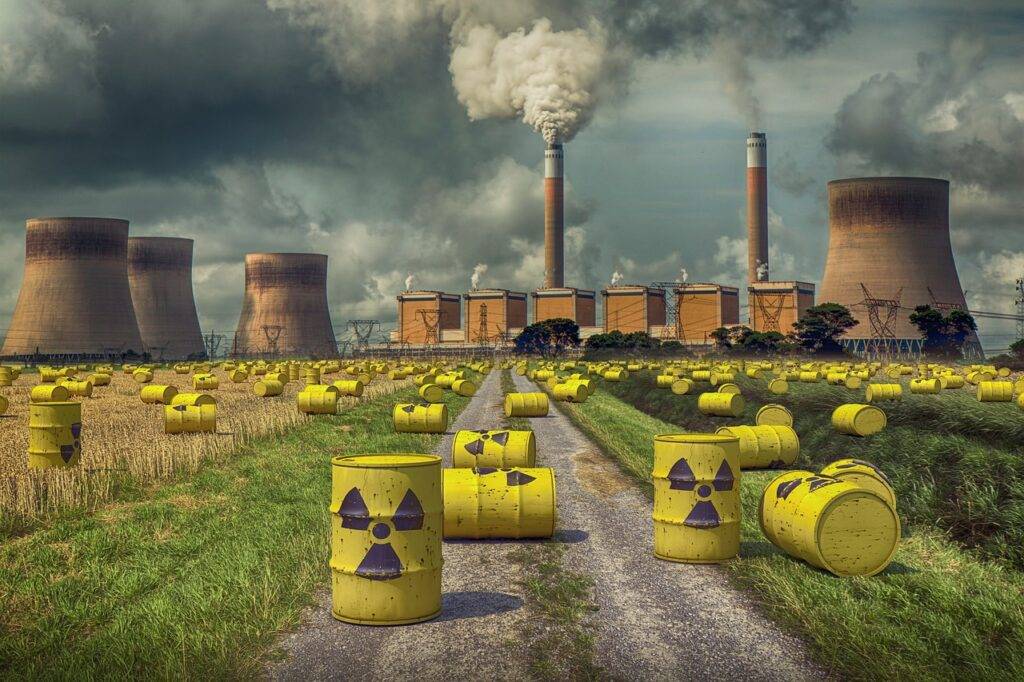
India is entering a new chapter in its energy history with the Sustainable Harnessing and Advancement of Nuclear Energy for Transforming India (SHANTI) Bill, 2025. This landmark law completely changes how the country produces atomic power, moving away from 60 years of government-only control to a model that includes private companies. For decades, the Atomic Energy Act of 1962 restricted nuclear power to state-run bodies like the Nuclear Power Corporation of India Limited (NPCIL). The new Bill repeals that act and the Civil Liability for Nuclear Damage (CLND) Act, 2010, creating one simple rulebook for everything from mining uranium to building reactors. The main goal is to reach 100 GW of nuclear capacity by 2047. Currently, India has about 8.8 GW, so this requires a huge expansion, adding over 4 GW every year for the next two decades.
The Legislative Metamorphosis of Indian Nuclear Policy
The introduction of the SHANTI Bill 2025 marks a major and historic shift in India’s nuclear policy. For more than six decades, the Atomic Energy Act, 1962 has governed the country’s nuclear sector. It imposed a strict state monopoly over the entire nuclear fuel cycle, from mineral exploration to power generation and waste management. This closed framework was useful during the period of technological isolation after India’s early nuclear tests. However, it no longer meets the needs of a modern $5 trillion economy facing rapidly growing electricity demand and an urgent need for deep decarbonization.
The SHANTI Bill 2025 acts as an umbrella law that repeals the Atomic Energy Act, 1962 and the Civil Liability for Nuclear Damage Act, 2010. It brings India’s civil nuclear governance under a single, comprehensive legal framework. This change goes beyond administrative simplification. It aims to attract large private investment and link the domestic industry with the global nuclear supply chain. By ending the state monopoly, the Bill allows Indian private companies, joint ventures, and public–private partnerships to build, own, operate, and decommission nuclear power plants for the first time.
This legislative overhaul is based on the Nuclear Energy Mission for Viksit Bharat. The mission sets a roadmap to achieve a nuclear installed capacity of 100 GW by 2047. To reach the target from the current 8.8 GW base, India needs a more than tenfold expansion. This requires adding over 4 GW annually for the next two decades. The SHANTI Bill enables this scale-up by easing financing, liability, and regulatory constraints.
The primary driver for this reform is the critical need for reliable, 24/7 baseload power. This is to support energy-intensive sectors such as semiconductor fabrication, artificial intelligence data centres, and high-performance computing. While India has added over 200 GW of non-fossil capacity by 2025, the intermittent nature of solar and wind power continues to strain grid stability. Nuclear energy often operates at a capacity factor above 90%. This makes it well-suited to provide stable power for a grid that increasingly depends on variable renewable energy sources.
Furthermore, the fiscal requirements for the 100 GW target are astronomical. The expansion requires an investment of about ₹15 lakh crore. Since the Department of Atomic Energy and the Nuclear Power Corporation of India Limited cannot meet these costs alone, private investment will be essential.
| Metric | Baseline (2024-25) | Target (2047) |
| Installed Capacity | 8,780 MW | 100,000 MW |
| Generation Share | ~3.1% | 10.0% |
| Regulatory Framework | Atomic Energy Act, 1962 | SHANTI Bill, 2025 |
| Primary Operator | State Monopoly (NPCIL) | Private-Public Mix |
| Liability Regime | Supplier Liability (Section 17b) | Operator-Channelized |
Technical Architecture of the Bharat Small Modular Reactor
A central pillar of the SHANTI Bill is the formal promotion and deployment of Small Modular Reactors (SMRs). Unlike large traditional reactors that need extensive civil works and specific sites, SMRs are modular. Their main components can be built in factories and transported to the site for assembly. This approach significantly reduces construction timelines and upfront capital expenditure, making nuclear energy accessible to a wider range of industrial players.
The Bhabha Atomic Research Centre (BARC) has developed three primary indigenous designs under the Nuclear Energy Mission: the 200 MWe Bharat Small Modular Reactor (BSMR-200), the 55 MWe SMR-55, and a 5 MWt High-Temperature Gas-Cooled Reactor (HTGR) intended for green hydrogen production.
Reforming the Liability
Perhaps the most significant commercial impact of the SHANTI Bill 2025 is the revision of the civil liability framework. The earlier CLND Act of 2010 faced criticism for its “right of recourse” against suppliers under Section 17(b). This clause effectively discouraged participation by international technology providers from the United States and Europe.
The SHANTI Bill 2025 aligns India’s liability regime with the international Paris and Vienna conventions by channelising liability exclusively to the operator. The law removes statutory supplier liability for defective equipment. However, operators can still seek compensation if a private contract clearly allows it. This change aims to resolve legal disputes that have delayed projects such as the six EPR reactors at Jaitapur.
To enable private entry into the SMR sector, the Bill introduces a graded liability structure based on reactor capacity. As a result, operator liability aligns with actual risk rather than large-scale reactor limits. Moreover, this approach lowers financial barriers for SMR developers. For damages beyond the prescribed caps, the Central Government assumes responsibility through the Nuclear Liability Fund. Overall, total liability for any single incident is capped at the rupee equivalent of 300 million Special Drawing Rights, about ₹3,400 crore.
Regulatory Ecosystem
The Bill also confers statutory status on the Atomic Energy Regulatory Board (AERB), which previously functioned under an executive order and reported through the DAE. This evolution is critical for maintaining public trust as private corporations enter the nuclear sector. The AERB is now accountable to Parliament and possesses enhanced powers to set safety standards, conduct inspections, and suspend licenses in case of safety breaches.
The legislation also creates an Atomic Energy Redressal Advisory Council and a specialised Atomic Disputes Tribunal. Through this mechanism, it resolves liability and regulatory disputes more efficiently. As a result, it avoids the delays commonly associated with the general civil court system.
Grid Integration and the Decarbonization Roadmap
The SHANTI Bill is a key component of India’s strategy to reach Net Zero by 2070. Scientific analysis of the power grid shows that a renewables-only approach would require massive overbuilding of solar and wind capacity and prohibitively expensive storage solutions to manage seasonal variations.
Nuclear energy offers the highest energy density of any power source, which is a vital consideration for a high population density country like India. A single 1,000 MWe nuclear plant requires approximately 1.3 square miles of land, whereas a solar farm of equivalent capacity would require approximately 31 times more land, and a wind farm would require 173 times more.
| Power Source | Land Required (per 1,000 MW) | Capacity Factor (%) |
| Nuclear | ~1.3 sq. miles | 90% – 92% |
| Solar PV | ~40-50 sq. miles | 15% – 25% |
| Onshore Wind | ~200-250 sq. miles | 25% – 40% |
Backend Fuel Cycle: Waste and Vitrification
The management of radioactive waste remains one of the most scientifically rigorous aspects of the SHANTI Bill’s implementation. India follows a “closed fuel cycle” approach, where spent fuel is not treated as waste but as a resource to be reprocessed for plutonium extraction.
The high-level liquid waste generated during reprocessing is immobilised in stable borosilicate glass matrices through a process called vitrification. The Nuclear Recycle Board at BARC recently commissioned the AVS Annexe Vitrification Facility at Tarapur. In this facility, Joule Heated Ceramic Melter technology immobilises radioactive waste. In this process, electric current flows through molten glass to generate heat. As a result, the melter maintains temperatures above 950 °C for uniform isotope mixing. Consequently, radioactive materials become safely locked inside a stable glass matrix. However, molten glass is extremely corrosive and damages conventional materials. Therefore, BARC partnered with MIDHANI and the Nuclear Fuel Complex. Through this collaboration, they developed the indigenous high-nickel alloy UNS N06690. This alloy supports critical melter components. Ultimately, the effort strengthens technological self-reliance in India’s backend nuclear fuel cycle.
Plants safely store low- and intermediate-level waste in near-surface disposal facilities at their sites. However, vitrified high-level waste requires final disposal in a deep geological repository. In India, research on such repositories focuses on finding stable rock formations, such as crystalline granite, that can isolate the waste for more than a thousand years. Scientific models for site selection emphasise the multi-barrier system, which combines the chemical stability of the vitrified glass, the corrosion resistance of the copper or steel canisters, the self-sealing properties of bentonite clay buffers, and the natural barrier of the host rock.
Socio-Economic Friction and Public Perception
Despite its scientific and strategic merits, the SHANTI Bill has faced significant opposition from trade unions and public interest groups. The All India Power Engineers Federation (AIPEF) has raised concerns that the Bill’s “profit-driven” licensing regime could prioritise corporate gain over public safety, particularly by diluting the liability burden on equipment manufacturers.
Critics also highlight a “backdoor” provision that allows the central government to exempt certain facilities from standard licensing or liability when it considers the risk to be insignificant. Opposition members of Parliament argue that this provision creates gaps in oversight that could be misused. They also criticise the exclusion of civil courts from nuclear matters, stating that it weakens legal remedies for citizens who may be affected by a nuclear accident.
The government has countered these arguments by highlighting that all operators, public or private, remain under the stringent oversight of the statutory AERB. Safety, including environmental safety, will be the highest priority, and construction commences only after obtaining environmental clearance from the Ministry of Environment, Forest and Climate Change.
Geopolitical Strategy and Global Nuclear Leadership
The SHANTI Bill 2025 positions India as a meaningful contributor to the global nuclear energy ecosystem. By allowing up to 49% Foreign Direct Investment (FDI) in nuclear power generation, the Bill encourages global firms to establish Indian-incorporated joint ventures. This deepens India’s technological partnerships with countries like Russia, France, and the USA, while simultaneously building indigenous manufacturing capacity through “Make in India”.
The Bill also acknowledges the emergence of SMRs as a global trend, with many countries seeking decentralised, low-carbon solutions. By developing indigenous SMRs like the BSMR-200 and SMR-55, India aims to become an exporter of nuclear technology to early-stage countries, particularly those with smaller grids that cannot accommodate gigawatt-scale reactors.
Exponential increase in the nuclear hazards
At present, nuclear reactors in the country contribute about 1% of the total nuclear hazard. However, it may increase exponentially along with exponential contributions in the energy sector. Therefore, strict management rules and their implementation will be highly crucial for the upcoming decades for safety and further development. Understanding the impacts of increasing nuclear hazards on human health and remedial methods will be the upcoming focus of research to provide the sustainable energy needs of the country.
Conclusion
The SHANTI Bill 2025 marks a transformative shift in India’s atomic energy sector toward the Viksit Bharat vision of 2047. By doing so, it dismantles the historical state monopoly and modernises the nuclear liability framework. At the same time, the Bill grants statutory independence to the nuclear regulator. Together, these reforms address the three pillars of atomic expansion: capital, technology, and trust. From now on, achieving the 100 GW target will depend on the timely execution of the BSMR-200 pre-project phases. In parallel, success will require deep integration of the domestic private sector into the nuclear manufacturing value chain. Overall, the SHANTI Bill 2025 lays the legal foundation for an atomic renaissance. Ultimately, it positions nuclear energy as a central pillar of India’s clean, reliable, and sovereign energy future.