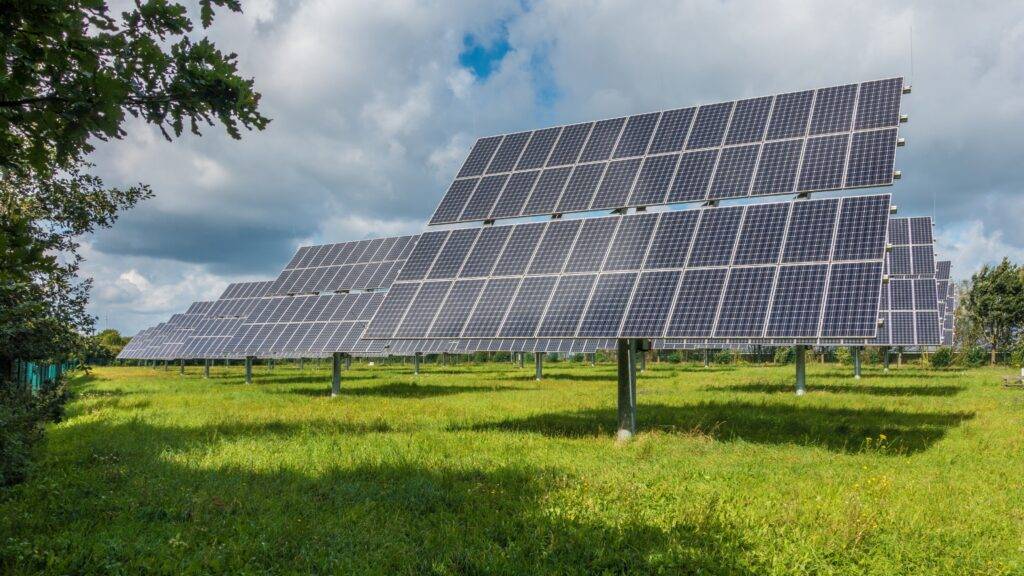
How can society meet rising energy demands without compromising environmental sustainability? Exploitation of Renewable Energy Resources explores how solar, wind, hydro, geothermal, and biomass energy can be harnessed to support sustainable development and energy security. As nations transition towards cleaner energy systems, understanding the potential, limitations, and environmental benefits of renewable resources has become increasingly important. These concepts are highly relevant for UGC-NET/JRF, SLET, ARS, GATE, and other competitive examinations.
Use this curated MCQ bank to assess your conceptual understanding, identify knowledge gaps, and strengthen your preparation for competitive examinations.
Syllabus Outline
- Utilisation and harnessing of sustainable energy sources, including solar, wind, hydroelectric, biomass, geothermal, and tidal energy.
- Development, deployment, and management of technologies and practices to capture energy from renewable sources such as sunlight, wind, water, biomass, geothermal heat, and ocean tides
- Reduce dependence on finite fossil fuels, mitigate environmental impacts, and promote global energy security and sustainability.
- Habitat destruction, ecosystem disruption, and biodiversity loss due to large-scale biomass harvesting or extensive hydroelectric dam construction
- Socio-economic consequences such as displacement of communities, loss of traditional livelihoods, and unequal distribution of benefits
- Principles, applications, and integration of renewable energy into existing energy systems, policy frameworks, and market dynamics
Quick Study Guide
Exploiting renewable energy involves converting natural, continuous fluxes of mass and energy into electrical or thermal power using the principles of thermodynamics, fluid dynamics, and quantum mechanics.
- Photovoltaic Conversion Mechanics: Solar harvesting relies on the photoelectric effect. When incoming photons possess energy greater than a semiconductor’s bandgap energy, they are absorbed by a p-n junction. This excites valence electrons into the conduction band, creating electron-hole pairs that an internal electric field separates to generate a direct electrical current.
- Wind Aerodynamics and the Betz Limit: Wind turbines extract kinetic energy from moving air masses. As wind flows over asymmetric rotor blades, a pressure differential creates aerodynamic lift, spinning the rotor. The maximum efficiency of this extraction is capped by the Betz Limit at 59.3% because some kinetic energy must remain in the air mass to maintain continuous fluid flow away from the blades.
- Hydroelectric Energy Extraction: Hydroelectric systems convert gravitational potential energy from elevated water into kinetic energy as it flows down a closed pipe (penstock). This high-velocity fluid flux spins a hydraulic turbine to generate electricity. Total power output depends on the hydraulic head (vertical drop distance) and the volumetric flow rate.
- Geothermal Heat Exchanges: Geothermal energy taps deep subsurface heat generated by the radioactive decay of unstable isotopes 238U, 232Th, and 40K. Extracted steam or superheated water drives steam turbines, where the thermodynamic efficiency is strictly limited by the Carnot efficiency limit based on the temperature gradient between the deep reservoir and the surface.
- Capacity Factors and Storage Physics: Intermittent energy sources are evaluated by their capacity factor. the ratio of actual energy produced over time to the maximum potential continuous output. Overcoming this variable supply requires energy storage systems, such as pumped-storage hydropower (storing energy as gravitational potential) or electrochemical batteries (storing energy via reversible reduction-oxidation chemical reactions).
Test Your Knowledge
This quiz contains 25 concept-based MCQs on “Exploitation of Renewable Energy Resources“. Each question has a single correct/most appropriate answer.
*****
1. Lithium-ion batteries are a dominant technology for energy storage in applications like electric vehicles and grid-scale storage. What is a major challenge associated with the widespread adoption of lithium-ion batteries?
a) Low energy density
b) Safety concerns
c) Short lifespan
d) Limited availability of lithium resources
2. The integration of renewable energy into existing energy systems involves:
a) Increasing reliance on fossil fuels
b) Changing policy frameworks
c) Modernising traditional energy systems
d) Utilising renewable energy exclusively
3. What is a key principle in promoting energy security and sustainability?
a) Increasing reliance on fossil fuels
b) Considering economic consequences
c) Diversifying energy sources
d) Considering policy frameworks
4. Which renewable energy source is least affected by weather variations?
a) Solar energy
b) Wind energy
c) Hydroelectric energy
d) Biomass energy
5. What is the primary purpose of capturing energy from renewable sources?
a) To decrease economic losses
b) To mitigate environmental impacts
c) To promote energy security
d) To prevent habitat destruction
6. Which renewable energy sources are associated with the net metering concept?
a) Solar energy
b) Wind energy
c) Biomass energy
d) Geothermal energy
7. Which renewable energy source has the highest capacity factor?
a) Solar energy
b) Wind energy
c) Biomass energy
d) Geothermal energy
8. What is a major challenge in harnessing solar energy?
a) Dependence on weather conditions
b) High initial installation costs
c) Limited geographic availability
d) Lack of technological advancements
9. The principle of energy security emphasises:
a) Dependence on finite fossil fuels
b) Equal distribution of benefits
c) Reduction of energy diversity
d) Reliability of energy sources
10. Which renewable energy source has the lowest environmental impact?
a) Wind energy
b) Biomass energy
c) Solar energy
d) Geothermal energy
11. Concentrating photovoltaic (CPV) systems use lenses or mirrors to focus sunlight onto smaller, high-efficiency solar cells. What is the primary advantage of CPV systems compared to traditional flat-plate PV systems?
a) Lower material cost
b) Higher efficiency and power output
c) Simpler installation process
d) Wider range of operational temperatures
12. Which renewable energy source is most suitable for decentralised energy production?
a) Solar energy
b) Wind energy
c) Biomass energy
d) Geothermal energy
13. Which renewable energy source has the highest energy conversion efficiency?
a) Solar energy
b) Wind energy
c) Biomass energy
d) Geothermal energy
14. Which renewable energy source is most suitable for off-grid applications?
a) Solar energy
b) Wind energy
c) Biomass energy
d) Geothermal energy
15. The principle of energy security emphasises the importance of:
a) Environmental degradation
b) Technological stagnation
c) Socio-economic stability
d) Dependence on finite fossil fuels
16. What is a significant challenge in harnessing biomass energy?
a) Dependence on weather conditions
b) Limited geographic availability
c) High initial installation costs
d) Competition with food production
17. Which renewable energy source has the lowest energy conversion efficiency?
a) Solar energy
b) Wind energy
c) Biomass energy
d) Geothermal energy
18. What is a significant challenge in harnessing geothermal energy?
a) Dependence on weather conditions
b) Limited geographic availability
c) High initial installation costs
d) Technological stagnation
19. The concept of energy democracy is associated with:
a) Socio-economic stability
b) Considering policy frameworks
c) Equal participation in decision-making
d) Decreasing reliance on finite fossil fuels
20. Which renewable energy source has the highest potential for capacity expansion?
a) Solar energy
b) Wind energy
c) Biomass energy
d) Geothermal energy
21. Which point is not considered during the estimation of geothermal resources?
a) Depth, thickness and extent of geothermal aquifer
b) Fossil content of rocks
c) Salinity and geochemistry of fluid present in the aquifer
d) Properties of rock formation
22. Which category does bioenergy fall under?
a) Conventional Energy
b) Unconventional energy
c) Non-renewable energy
d) Renewable energy
23. Assertion (A): Solar and wind energy require larger infrastructure than the power produced.
Reason (R): The energy flux density of solar and wind energy is extremely low.
a) Both A and R are correct, and R is the correct explanation of A
b) Both A and R are correct, and R is the incorrect explanation of A
c) A is correct, but R is incorrect
d) A is incorrect, but R is correct
24. A recent study proposes using perovskite solar cells with traditional silicon cells to achieve record-breaking efficiencies. How might this combination address the limitations of each technology?
a) Perovskites can capture a broader range of sunlight, improving overall light absorption.
b) Silicon cells offer superior durability, protecting the more sensitive perovskites.
c) Both technologies require high processing temperatures, making combined production simpler.
d) The combination allows for a reduction in the amount of expensive silicon needed.
25. Which factor is NOT a consideration in reducing dependence on finite fossil fuels?
a) Environmental impacts
b) Technological advancements
c) Socio-economic consequences
d) Energy security
*****
Previous: Environmental Implications of Energy Use
Next: Air Pollution and Control
References
- Edward A. Keller (2022). Introduction to Environmental Geology, Pearson, 5th Edition.
- Sharma, P. D. (2017). Environmental Biology and Toxicology, Rastogi Publications, 3rd Edition.
- De, Anil Kumar and De, Arnab Kumar (2024). Environmental Chemistry, New Age International, 11th Edition.
- Odum, Eugene P., and Barrett, Gary W. (2004). Fundamentals of Ecology, Thomson Brooks/Cole, 5th Edition.
- Singh, J.S., Gupta, S.R., Singh, S.P. & Singh, R. (2026). Ecology, Environmental Science and Conservation, S Chand Publishing, 2nd Edition.
- Erach Bharucha (2017). Environmental Studies, Universities Press, 4th Edition.
🔗 Explore More MCQs: